
The investigations
Outside the city.
Inside the files.
Our out-of-bounds visits and HUD texture experiment: what we found, how we tested it, and what remains unresolved.
We decoded 677 retail region records and visited six unusual locations using the exploration tools.
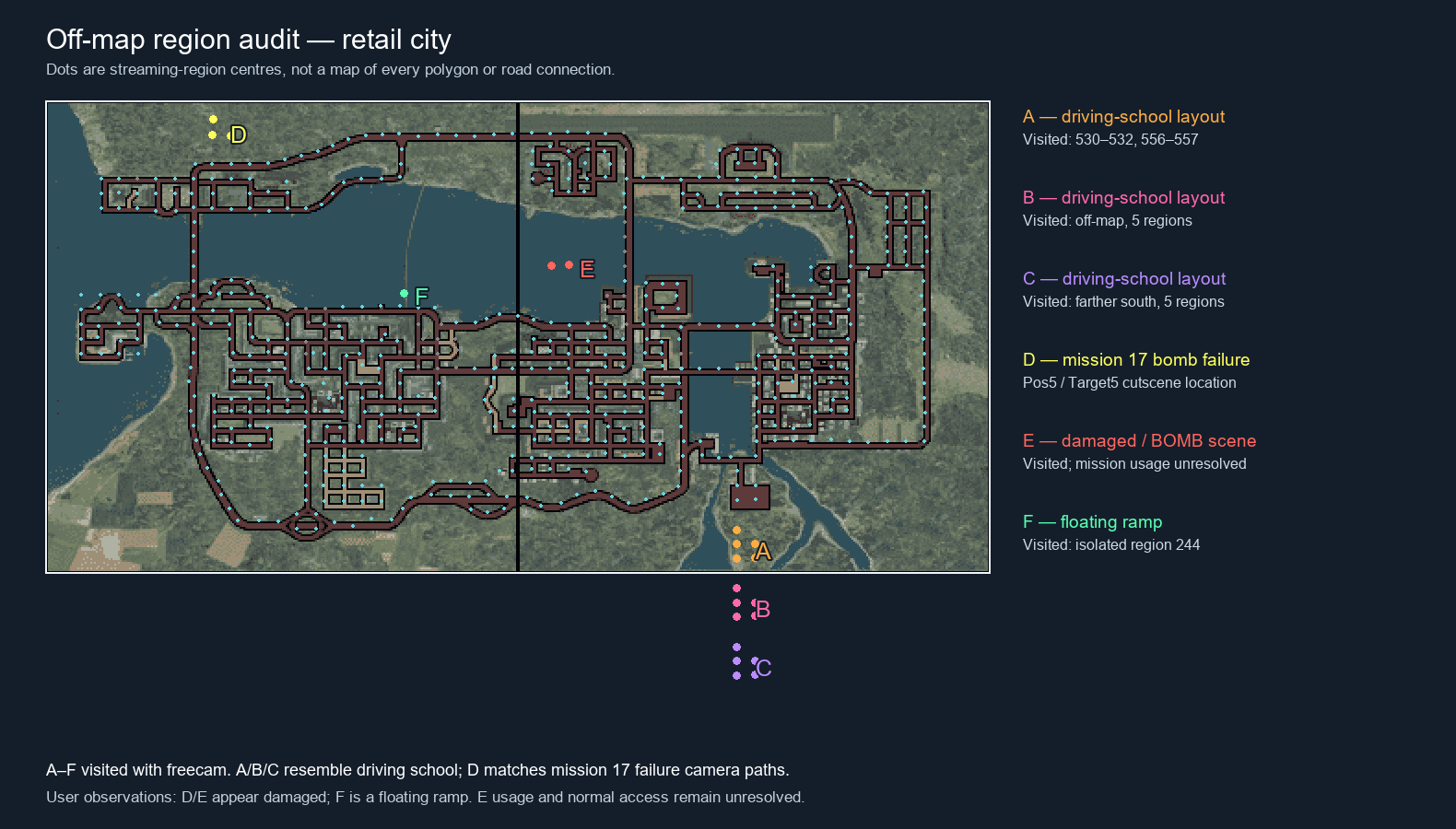
The locations we visited
| Marker | What we saw | What the evidence establishes |
|---|---|---|
| A / B / C | Three driving-school-like courses with paving, markings and surrounding structures. | Visited in-game. Exact exercise and mission assignments remain untraced. |
| D | A damaged / explosion-like set north of the road network. | Mission 17’s bombNOTLocated event selects camera paths positioned at D. Strong static evidence of a failure-cutscene set. |
| E | A damaged scene with internal BOMB / BOMB2 / BOMB3 geometry names. | Visited; actual mission use unresolved. Names alone are not sufficient. |
| F | An isolated floating ramp / stair-like structure. | Observed in-game. Purpose and normal accessibility remain unresolved. |
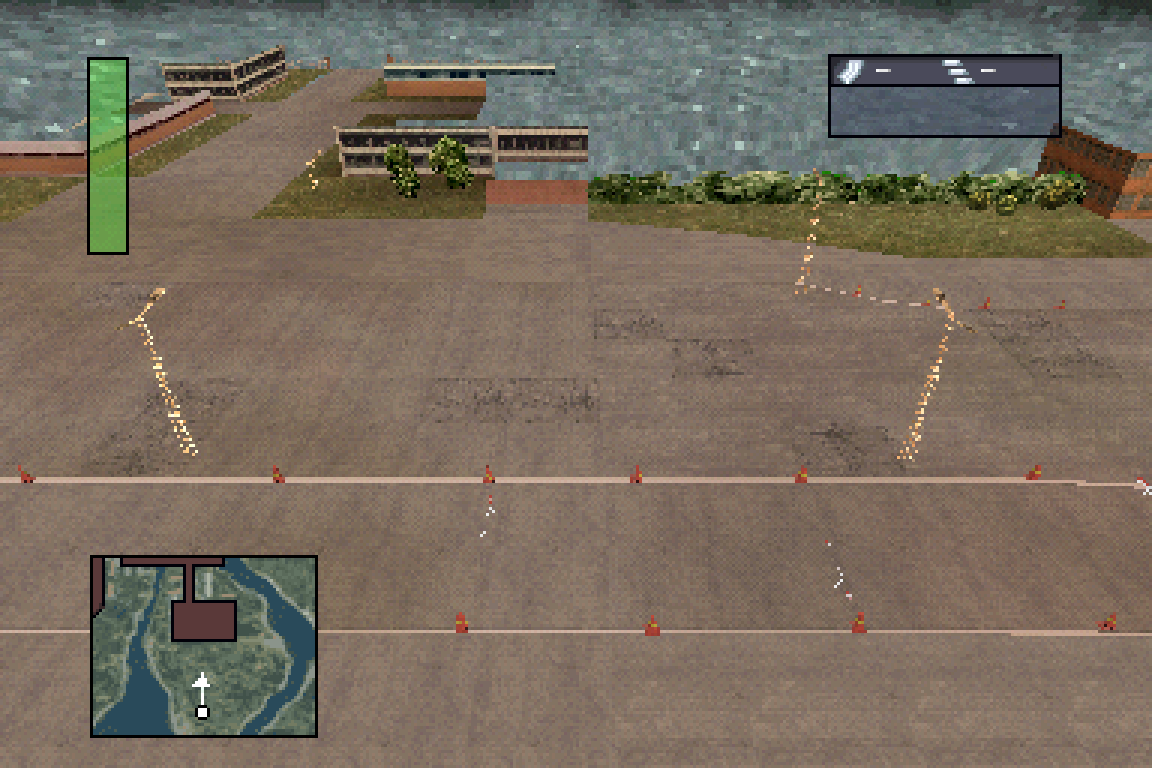
D is more than an unused-looking scene
In SCRIPT/17.SCB, the bombNOTLocated event selects the Pos5 and Target5 camera paths. CAMPATH/M17.PXD places both paths in D’s region group. That connects the location to a specific mission failure sequence.
This is a code-and-coordinate match. We have not replayed the failure sequence frame by frame, and its precise dispatch threshold has not been fully traced.
Does the game swap these scenes into the city?
The engine does have a table of 42 region replacement pairs. Scripts for missions 8, 10, 11, 14, 15, 18 and 20 activate groups from it. None of D’s or E’s region IDs appears on either side of that table. The mechanism we identified therefore does not directly account for either scene.
The engine’s replacement-group letters are unrelated to our A–F investigation markers.
Coordinates for future work
These are quantised streaming centres in engine units, not safe vehicle spawn points. Camera height must be established separately.
| Marker | Representative X | Representative Z | Region |
|---|---|---|---|
| A | 675840 | -489472 | 531 |
| B | 675840 | -640000 | 534 |
| C | 675840 | -790528 | 537 |
| D | -374784 | 601088 | 68 |
| E | 337920 | 227328 | 373 |
| F | 7168 | 155648 | 244 |
HUD texture experiment
Old artwork. Final game code.
We also tried the surviving NOTINUSE HUD textures in the running game. This is a compatibility experiment, with final code still controlling the layout.
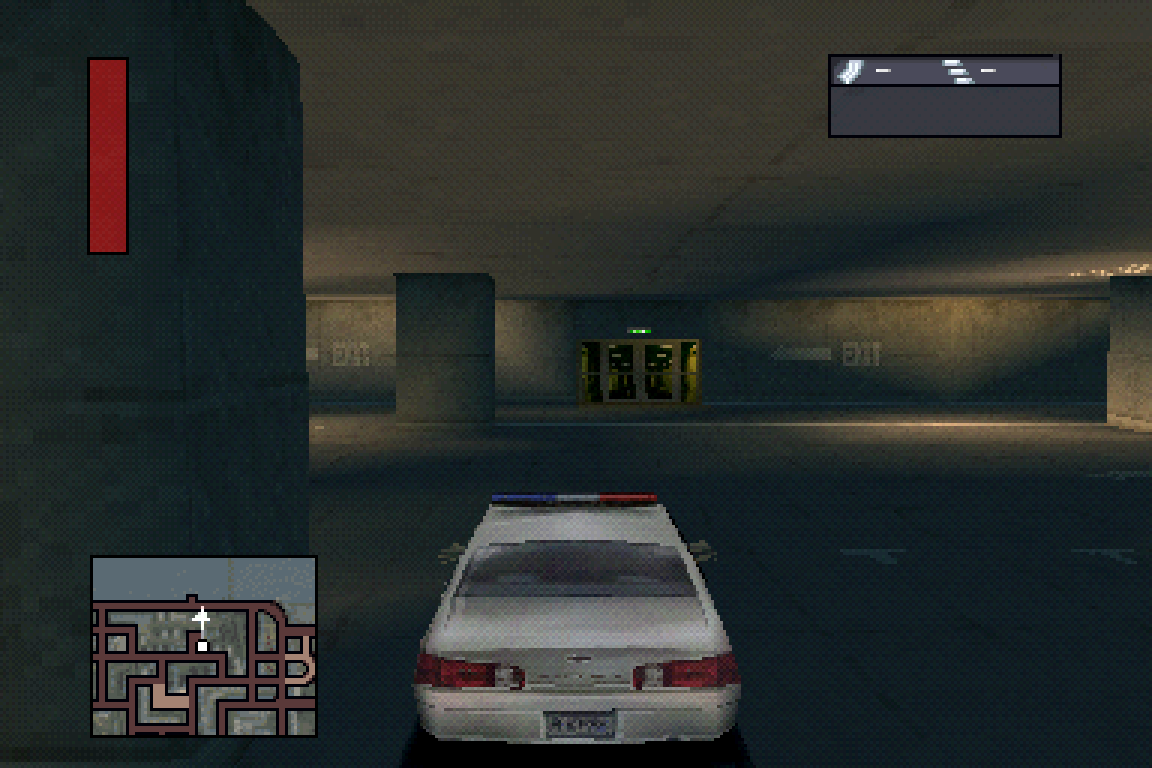
Two approaches, different results
First we loaded the complete _NOTINUSE_HUD/MISC.DOB bank. It reached RAM, but area loading halted. The compatible version retains retail resource definitions and page headers, substitutes five packed pixel pages, and copies palette entries within the retail allocation.
That version reached Free Patrol and continued running at 25 guest FPS. Informative rows from all five pages were matched in live VRAM.
The red health bar and changed map colours may result from palette or UV mismatches. Final code still controls the layout. Several sprite names differ between banks, so the intended historical appearance has not been reconstructed.
Keeping the experiment reproducible
The test uses a separate disc copy, with sector EDC/ECC recomputed after substitution. The original image was hash-verified unchanged. The research archive retains both builders, manifests, recovery notes and the successful screenshot.
A useful retail cross-check
Not every unusual asset is hidden content. Code tracing linked the skeleton pedestrian to the retail Halloween theme, GFX_SHOOTER and GFX_PERP to vehicle gunners, and GFS_BACKDROP to sky and horizon scenery. The catalogue labels the historical versions as legacy variants of used roles.